We help the builders that move their industries.

Every service below exists because something on a shop floor is losing money right now: a spindle cutting its own jaws, a line down on an obsolete part, a worn gauge passing bad parts, or an imported metal tool with a long reorder lead time. We rebuild the ones that fit as domestic composite, a local low-volume alternative to imported metal tooling. Your instant quote responds to the product or service, configuration, quantity, and service tier you select; engineering review confirms the final build, production start targets one business day of approval, and a 60-day make-it-right guarantee covers all of it.

Six problems that stop production.

Choose the problem closest to your floor. Each brief separates the cost of waiting from the response we deploy.

Choose a manufacturing problem
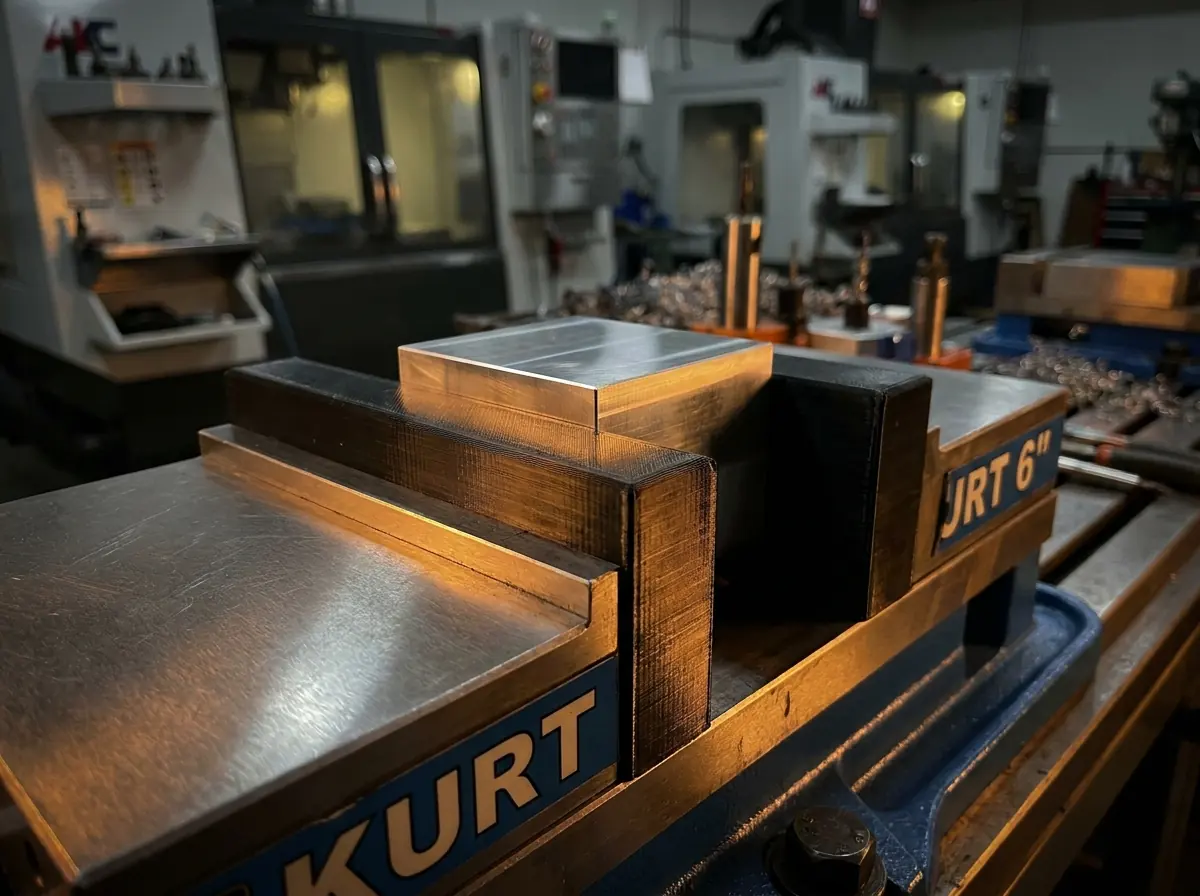
Black composite soft jaws holding a machined part in a CNC vise.
Representative composite workholding application.

Your CNC is cutting its own tooling

Every new part means soft jaws and workholding made in-house, on the same machine that should be cutting billable parts. The fixturing step is stealing spindle time before the job even starts.

The cost of leaving it

A machined jaw set runs $30 to $90 all-in (blank plus 15 to 30 minutes of machinist and spindle time), at loaded machine rates near $120 per hour. Every new setup repeats the bill, and the spindle earns nothing while it makes its own tooling.

What Key3D deploys

Printed conformal soft jaws, drill guides, and workholding from the Shop Catalog, non-marring, engraved, with production start targeted within one business day of approval. Your machine never stops to make its own tooling. See 3D printing.
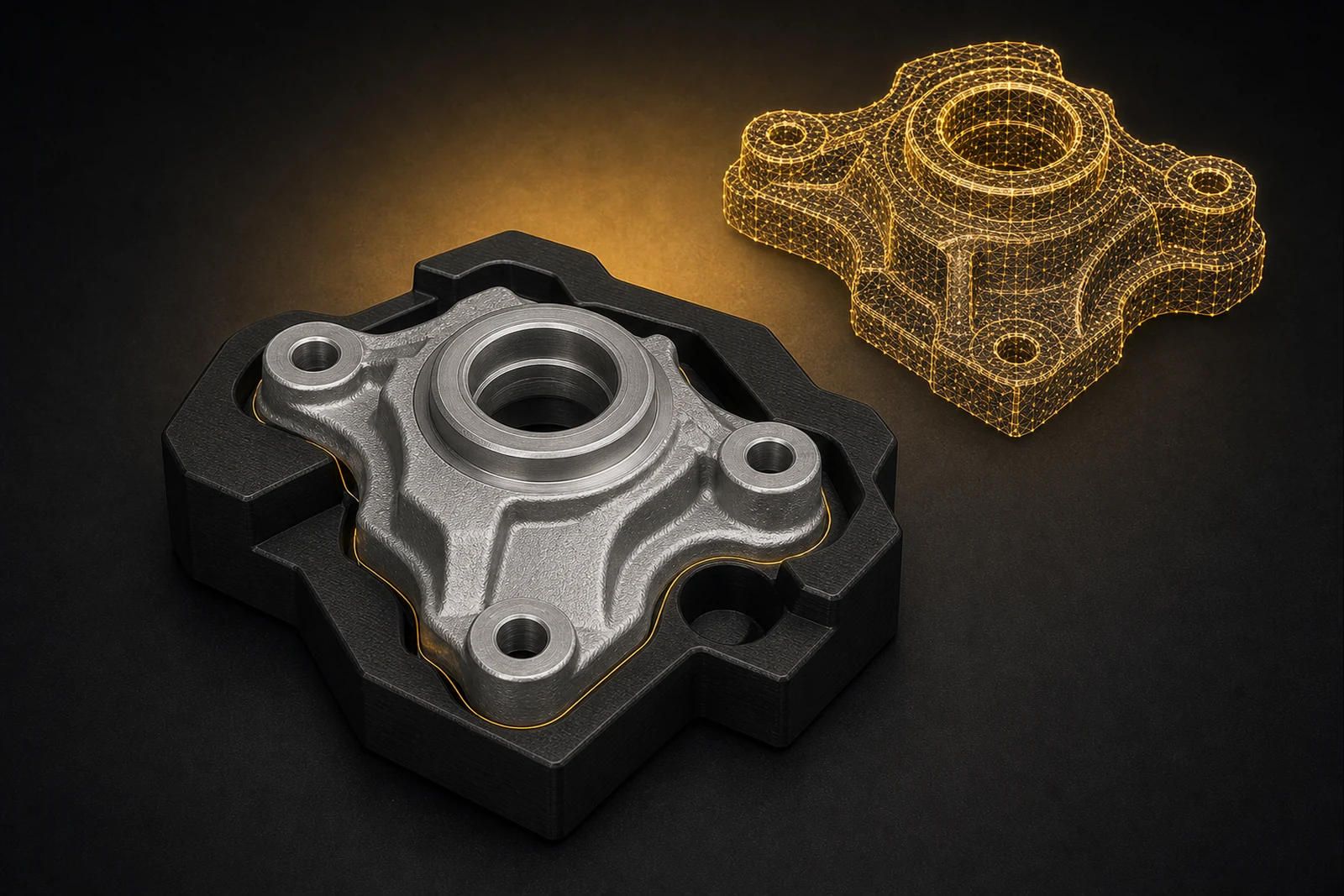
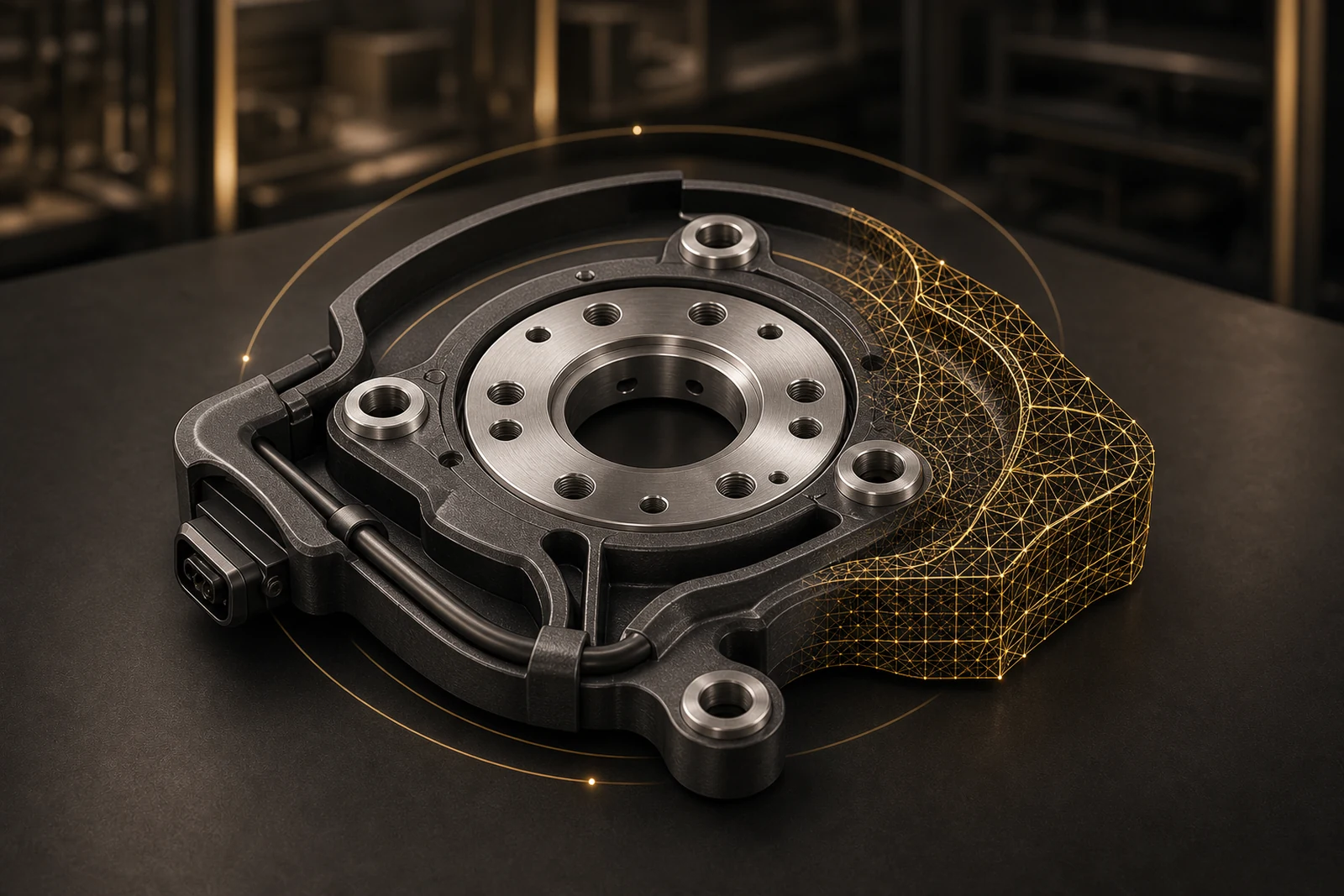
A machined housing seated in a black composite fixture beside its gold wireframe digital twin.
Representative conformal fixture and digital fit reference.

Defects caught downstream, rework eaten

Alignment errors and mis-seated parts sail through assembly and get caught at QC, or at the customer. The scrap and rework land on your cost, batch after batch.

The cost of leaving it

A machined check fixture runs $1,500 and up with weeks of lead time, so most lines run without one, and one bad batch costs more than many fixtures. The rework you are eating today is the recurring version of that bill.

What Key3D deploys

Poka-yoke jigs and alignment fixtures that only let the part seat the right way, moving the catch upstream where it costs nothing. Conformal inspection fixtures built from a scan of your own part, with a documented fit check before handoff. See DfAM modeling and scanning.

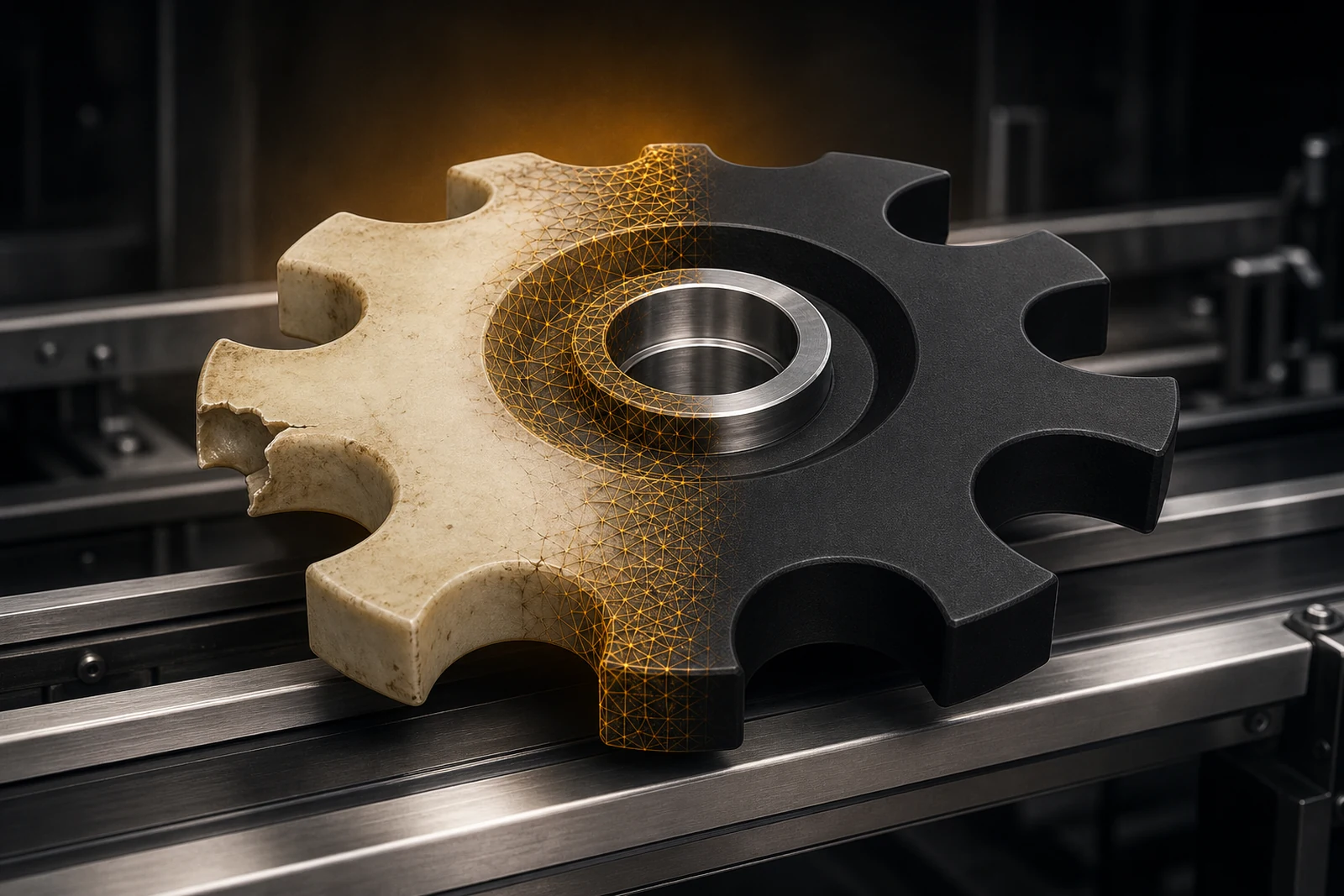
Worn star wheel alongside scanned mesh and corrected replacement geometry.
Representative obsolete-part recovery sequence.

The part is obsolete and the line is down

The OEM source is gone or backordered for months, and the machine sits while you wait. Downtime, not the part, is the real cost, and it compounds daily.

The cost of leaving it

Machine-shop reverse engineering of even a simple part typically runs $1,500 to $3,000, usually without the finished part included, on top of OEM lead times measured in months. Meanwhile the downtime meter runs at whatever your idle line costs per day.

What Key3D deploys

Bring the broken or worn original. We scan it, model it, and reproduce it locally, printed part included, deliberately priced below the typical machine-shop benchmark for simple-part work. Rush and Emergency tiers exist for exactly this. See reverse engineering.

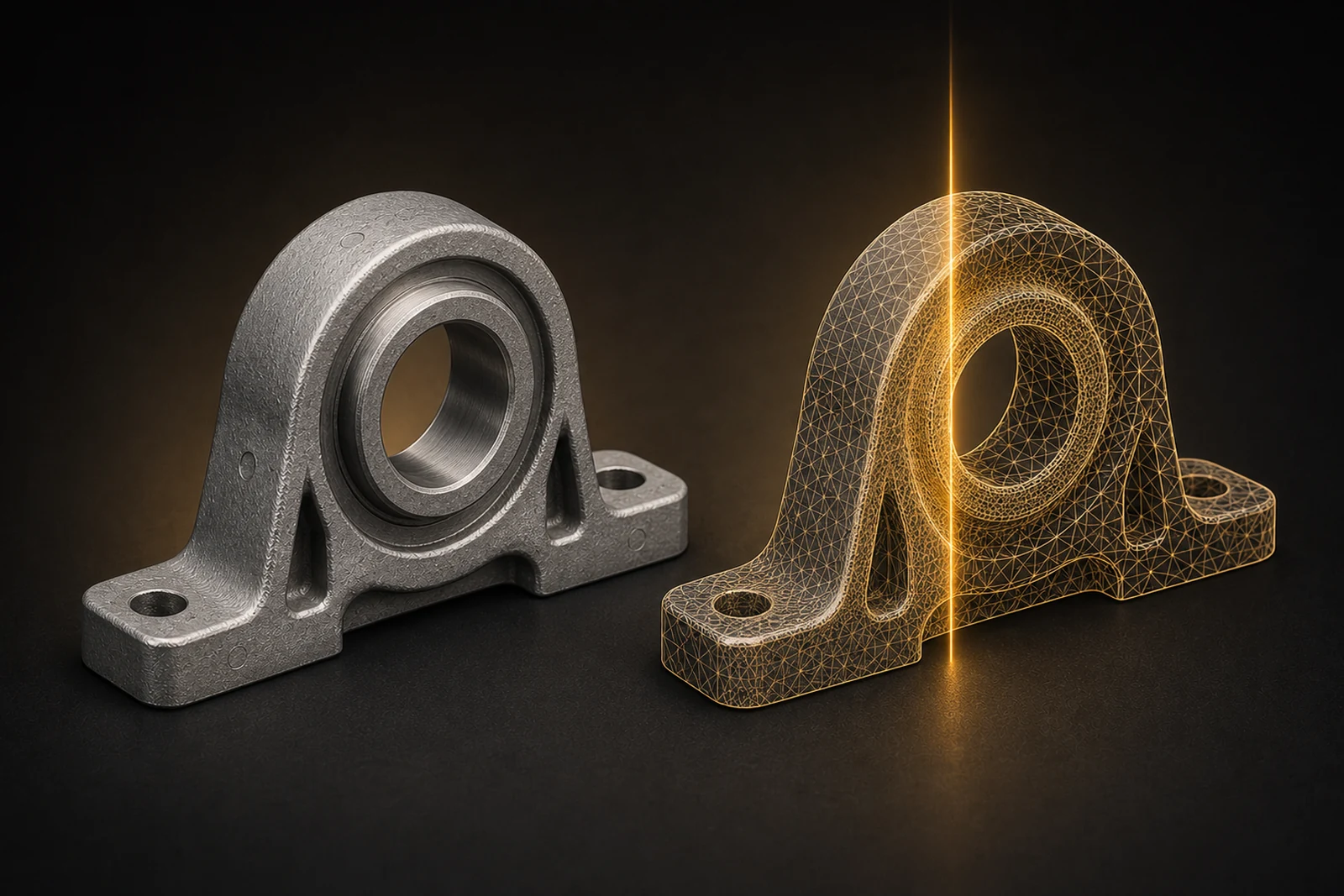
Physical bearing housing beside its digital mesh under a scanning plane.
Representative physical-to-digital capture.

No CAD, no drawing, no source file

The geometry lives in the part itself: a legacy fixture, a hand-built jig, an undocumented component. Nothing exists to quote from, manufacture from, or improve on.

The cost of leaving it

Standalone scanning services market at $200 to $400 per part, and re-drafting by hand from calipers burns engineering hours and invites error on complex geometry. Until the geometry is captured, every downstream fix stays blocked.

What Key3D deploys

High-resolution 3D scanning on site or in studio, turning the real part into accurate digital geometry. The $75 scan base applies as the bundled entry step inside reverse-engineering and fixture jobs; a standalone scan's output, size, complexity, quantity, and service tier build its instant quote. See 3D scanning.

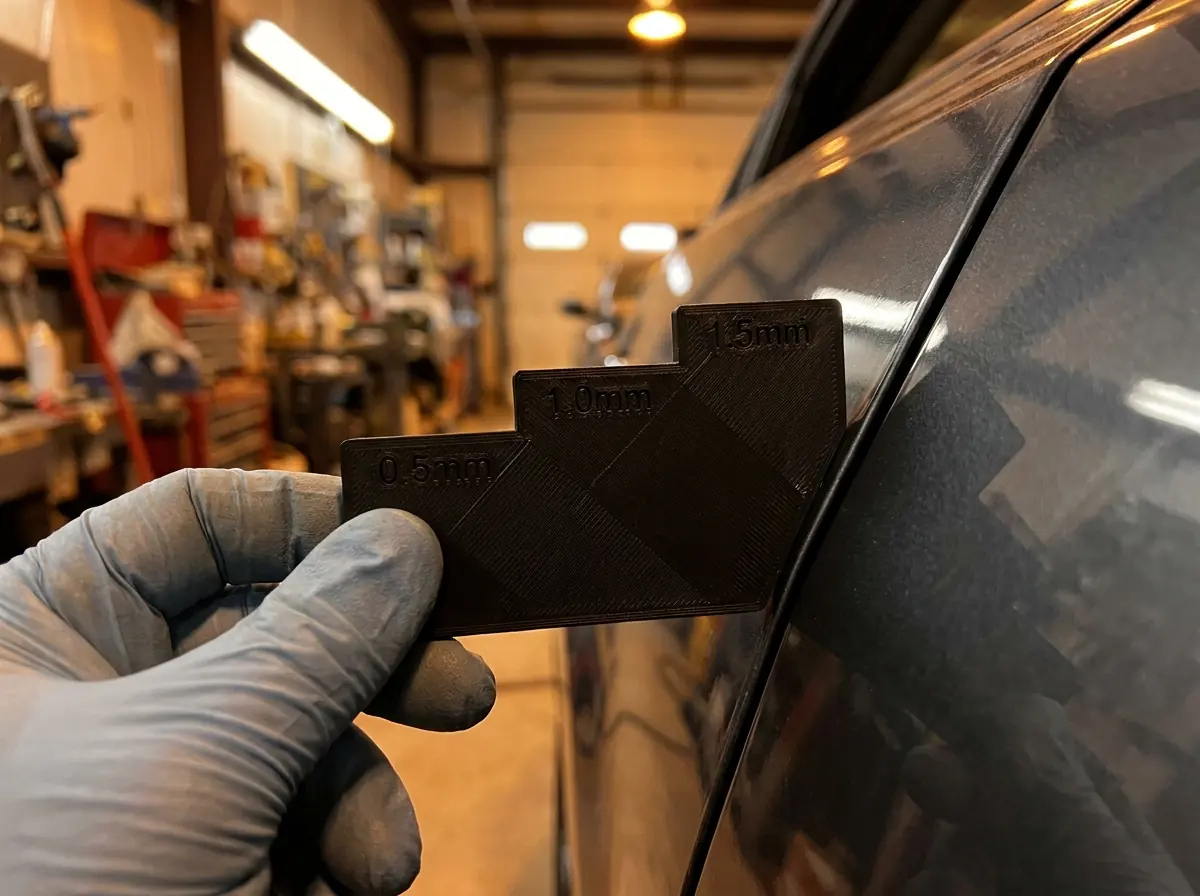
Printed stepped gauge checking a vehicle panel gap.
Representative printed inspection gauge in use.

Worn gauges are drifting your quality

Metal go and no-go gauges wear, and quality drifts with them. Replacements from a gauge maker cost enough that worn gauges stay in service long past the point they should.

The cost of leaving it

Custom precision gauges run $100 to $300 and up from a gauge maker, per gauge. A worn gauge that passes bad parts costs you a quality finding, and the audit trail that follows it.

What Key3D deploys

Reprint-on-wear go and no-go and check gauges with documented tolerance (about ±0.1 to 0.2 mm as printed) and engraved traceability on every gauge. Honest scope: tight-tolerance plug and ring gauges route to a gauge maker, and we say so at intake. Reprintable gauges from the Shop Catalog cover the day-to-day checks that drift first.

Robot dress-pack bracket progressing from design geometry to a finished part.
Representative design-for-additive development.

A concept with no printable model

The fix exists as a sketch, a napkin drawing, or a problem statement. Nothing is printable, quotable, or testable until someone turns intent into geometry.

The cost of leaving it

Un-modeled ideas stall. Engineering hours burn on hand drafting, and designs that skip design-for-additive review get discovered the expensive way, as a failed print or a part that will not seat.

What Key3D deploys

Design and design-for-additive work: turning a concept, a sketch, or a problem into a printable, fit-for-purpose model. Directional simulation compares options before material is committed; no certified FEA and no numeric strength claims until physically validated. The deliverable, complexity, quantity, and service tier build the instant quote; engineering review confirms scope. See DfAM modeling.

Send the problem.

Describe the jam or send the part. Build an instant quote from the product or service, configuration, quantity, and service tier you need; engineering review confirms the final build, with production start targeted within one business day of approval.